
CIAL 360 — A Workflow Architecture for Credit Risk
CIAL 360 — A Workflow Architecture for Credit Risk
Client
CIAL Dun & Bradstreet
Year
2019 – 2020
Role
Lead Product Designer
Key Contributions
Research, UX/UI, Prototyping, User Testing, Stakeholder Collaboration
587M
Companies in the D&B database
2x
Faster credit decisions on the platform
43
Countries across Latin America and the Caribbean
Challenge
Three roles, one database, and no shared way to decide.
CIAL Dun & Bradstreet holds credit data on more than 500 million companies. Finance teams were making real decisions on top of that data, but manually, one report at a time.
The hard part was never the data. It was that three different people needed it in three different ways. A credit analyst reads deeply. A finance manager scans for status. An executive just wants the decision made. Design for one and you usually break it for the other two.
So the question I started with wasn't "what screens does this need?" It was "how do three people share one source of truth without getting in each other's way?"
The Decision
I organised the entire platform around three verbs: search, analyse, decide.
Every screen, every permission, every view maps onto one of those three. It's the backbone the whole product hangs off.
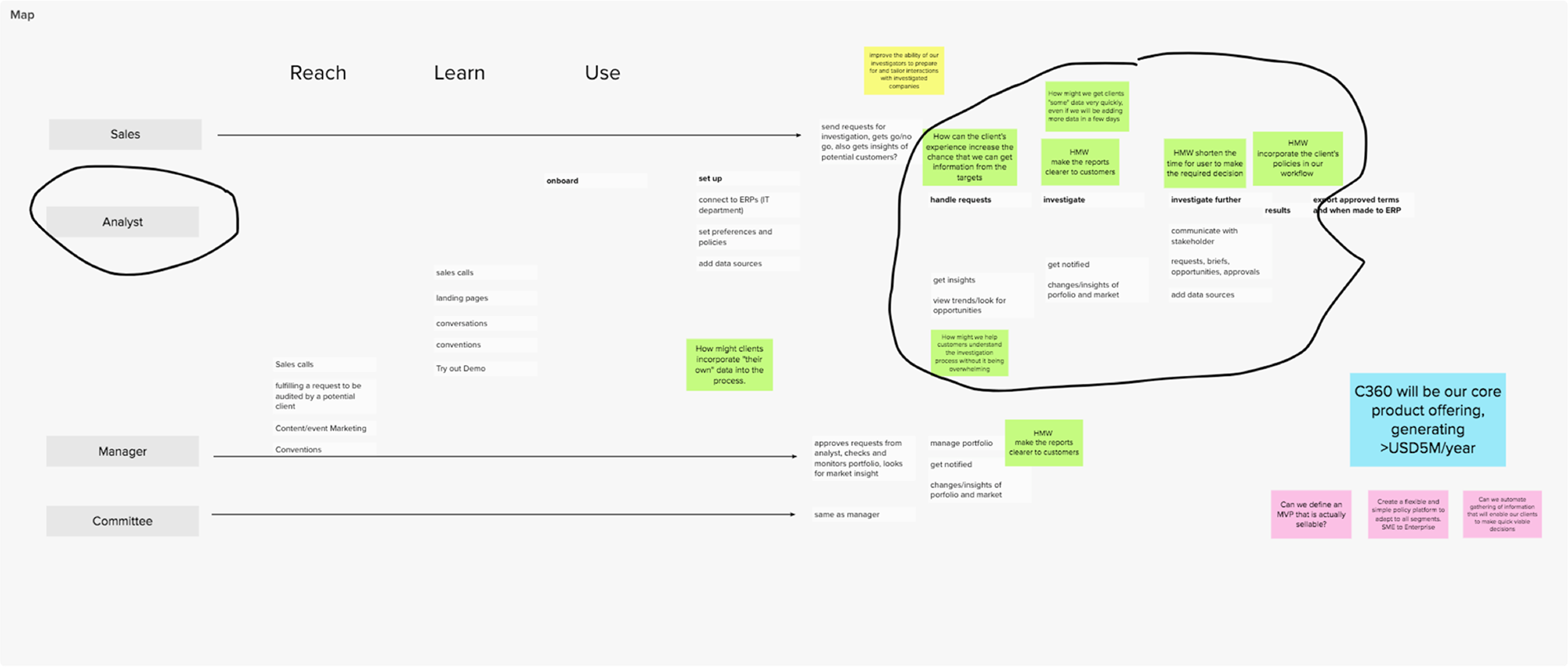
I didn't inherit that structure from the brief. It came out of a design sprint where I sat down with the people who'd actually use CIAL360, the finance managers, credit analysts, and reporting staff, and worked out what the platform needed to do before I designed a single screen.
That sprint produced a journey map across four roles and three stages. One note from that session stuck with me. A stakeholder called C360 the company's core product, so the stakes were clear from day one. The workflow I committed to in that room is the one that shipped.
What I Learned From Users
Every credit decision was happening in isolation, and that was the real problem.
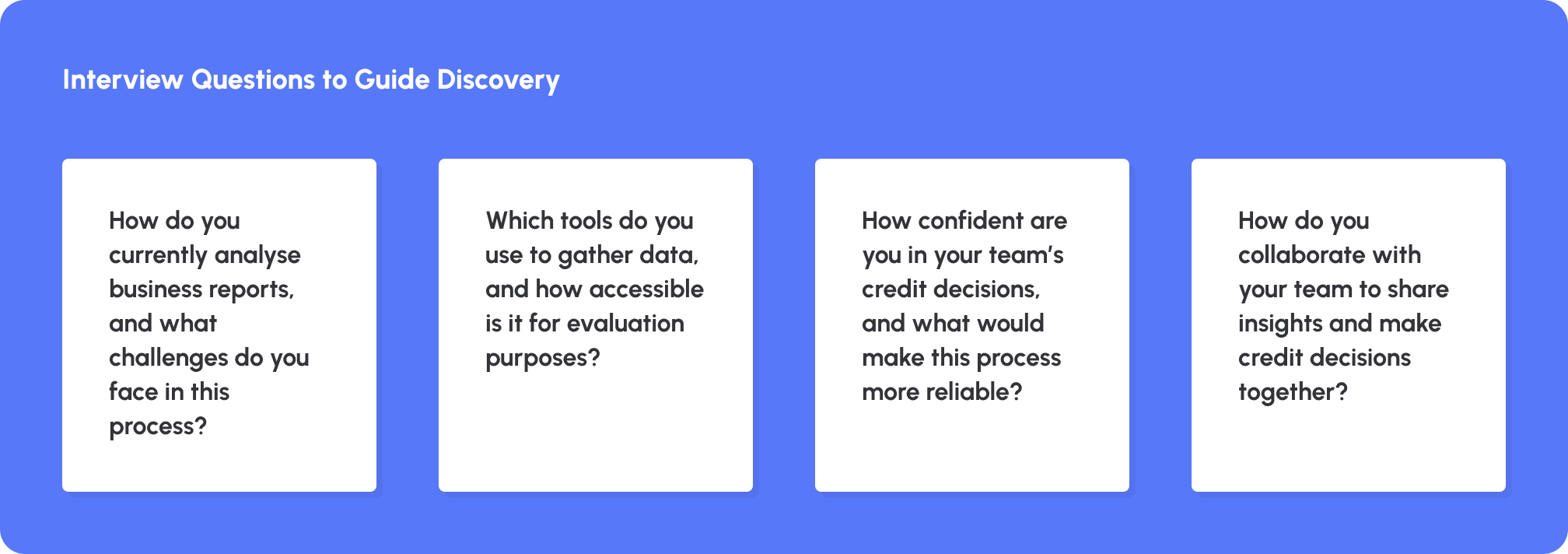
After the sprint I ran interviews with clients and internal reporting staff. The pattern was the same everywhere. People looked at one report at a time. No way to aggregate, no way to compare. Decisions came out slow and inconsistent across the same portfolio.
That told me where the hard design work actually was. Not the search. Not the permissions. The analyse step, the moment someone has to make sense of everything at once, was the part that would make or break the product.
How It Works
Three features, but really one workflow: search, analyse, decide.
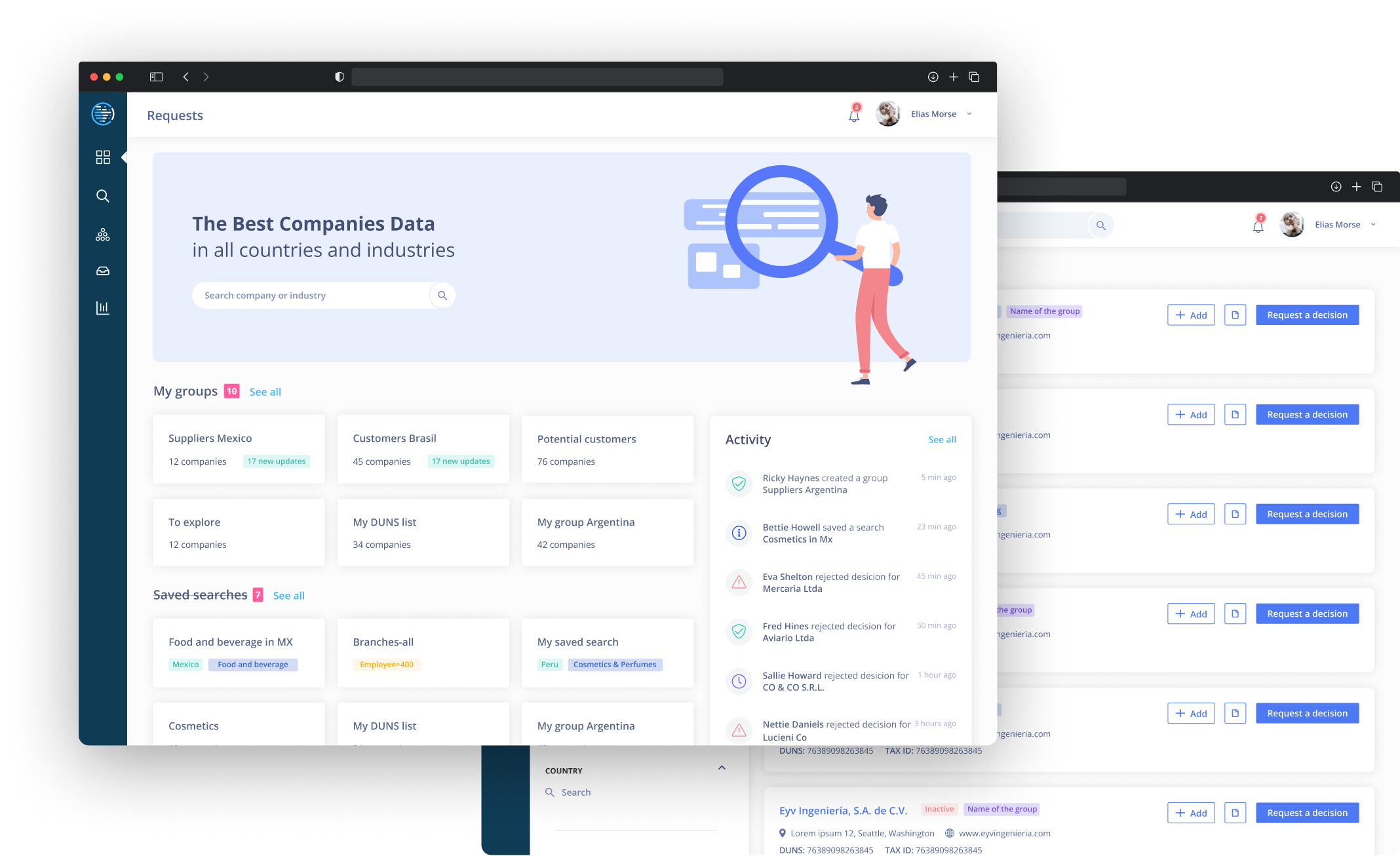
Search. The way in. Access to 587 million companies, searchable across multiple criteria. Its only job is to get people into analysis fast, so I kept it lean and out of the way.
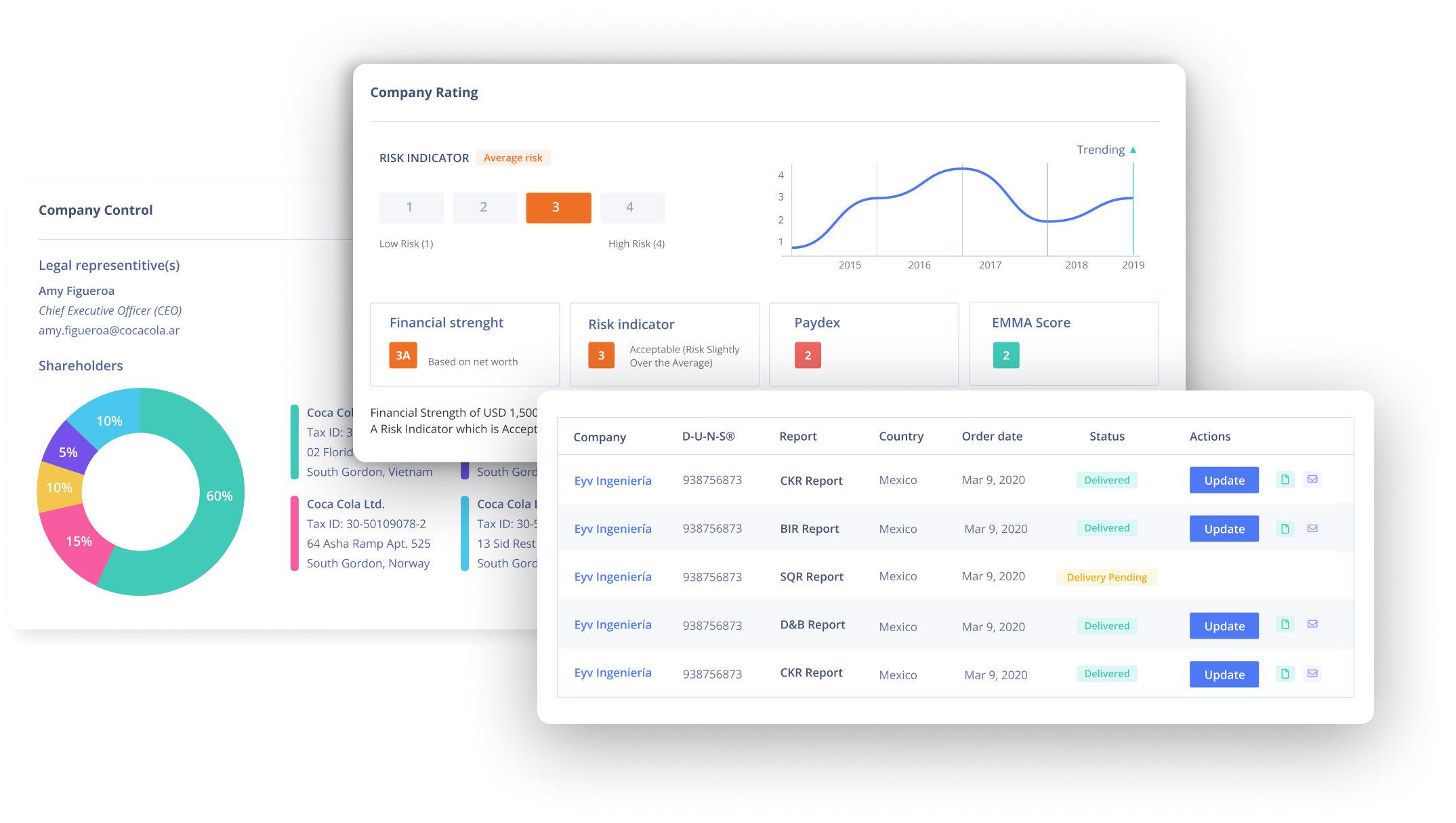
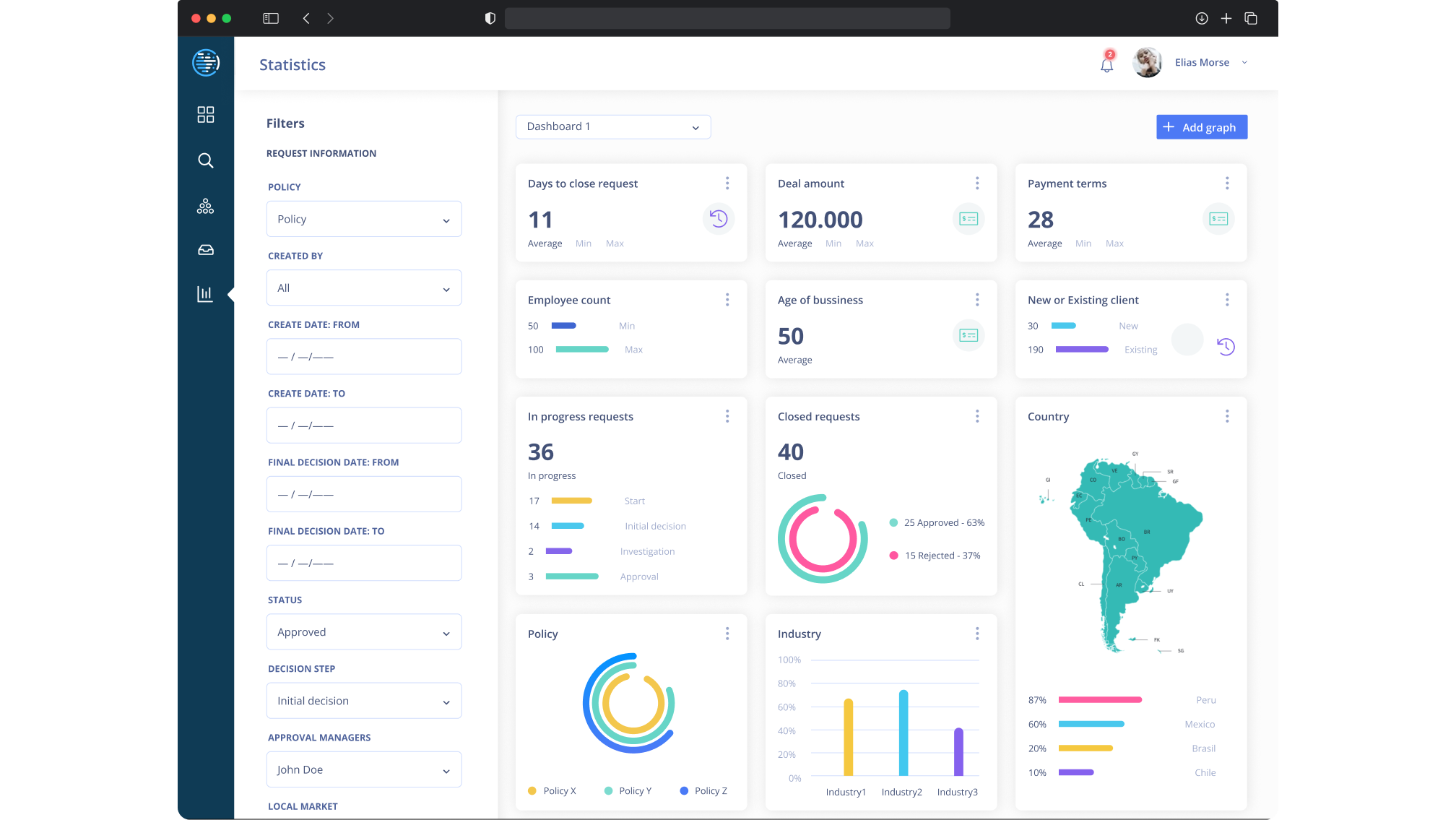
Analyse. This is where the project lived. I built two views over the same data. A table for comparing reports side by side, and a dashboard for the portfolio at a glance, showing days to close, deal amounts, payment terms, and country and industry breakdowns.
Why two? Because research told me analysts and managers read differently. Analysts need to compare row by row. Managers need the shape of things. One combined view would have failed both, so I gave each the view their job actually needs.
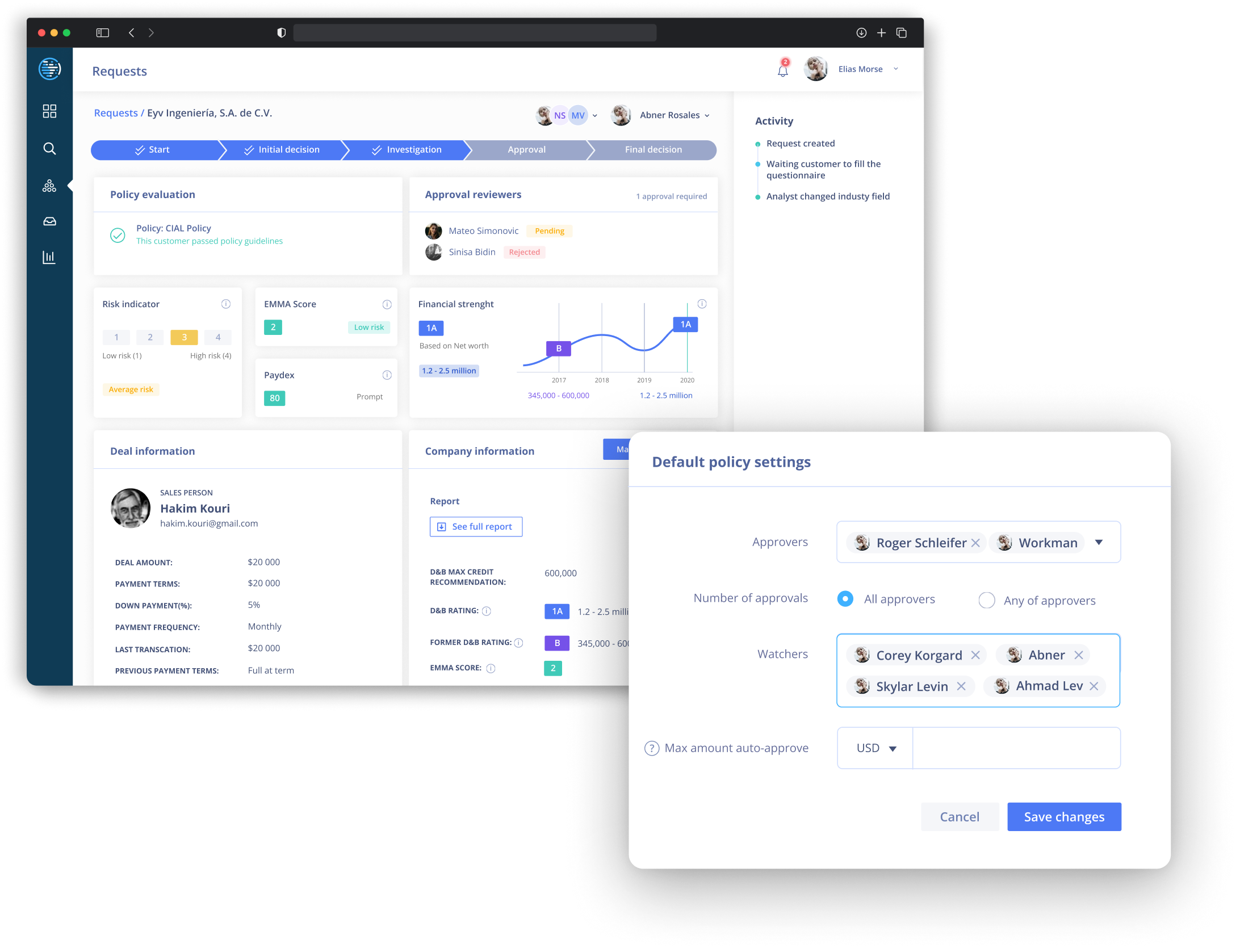
Decide. A structured approval flow that runs from start, to initial decision, to investigation, to approval, to final call. Each role gets the permissions their job requires. Analysts evaluate, managers recommend, executives approve. The policy settings layer, where you set approvers and auto-approval limits, is the proof the workflow holds up inside a regulated process.
Testing
Three real changes came straight out of watching people use it.
I ran sessions with early clients who'd come from manual credit processes. They showed me exactly where to sharpen things. I expanded filtering so people got to insight faster in the analyse view, made workflow status clearer across the team, and adjusted navigation per role so nobody carried decisions that weren't theirs.
Result
Finance teams stopped comparing reports by hand.
Credit decisions moved into one structured flow, search, analyse, decide, with the right data in front of the right person at each step. CIAL360 is a live product today, used across CIAL Dun & Bradstreet's markets in Latin America.
.svg)
.avif)
.avif)