
Supplier360 — Digitising Supplier Risk for Latin America
Supplier360 — Digitising Supplier Risk for Latin America
Client
CIAL Dun & Bradstreet
Year
2019–2020
Role
Product Designer
Key Contributions
Market Research, UX/UI Design, User Testing, Stakeholder and Developer Collaboration
587M
D&B entities available for supplier screening
20,000+
Clients powered by CIAL D&B platform
43
Countries across Latin America and the Caribbean
Challenge
Four different users, two opposite cognitive loads, one system that had to hold both.
Across Latin America, companies were running supplier relationships out of scattered spreadsheets, email chains, and slow manual approvals. Procurement, Finance, and Compliance each worked from a different copy of the same information, with no shared system, no audit trail, and no way to catch supplier risk before it turned into a problem.
That is three internal roles with different reading speeds and different decision rights, all needing the same data. Then there is a fourth user the internal team never sees: the supplier, an outside company logging in for the first time to submit its own information.
The Decision
One data spine, two interfaces, sized to two jobs that have nothing in common.
The internal side needs density: risk grades, D&B ratings, audit trails, document status, approval routing. The supplier side needs the opposite, one question at a time, plain language, and a clear answer to "why do you need this?"
I designed both without letting either collapse into a compromise. Same product, same data underneath, two interfaces built for two completely different relationships with it.
Research
At-risk suppliers were only ever spotted after the problem had already escalated.
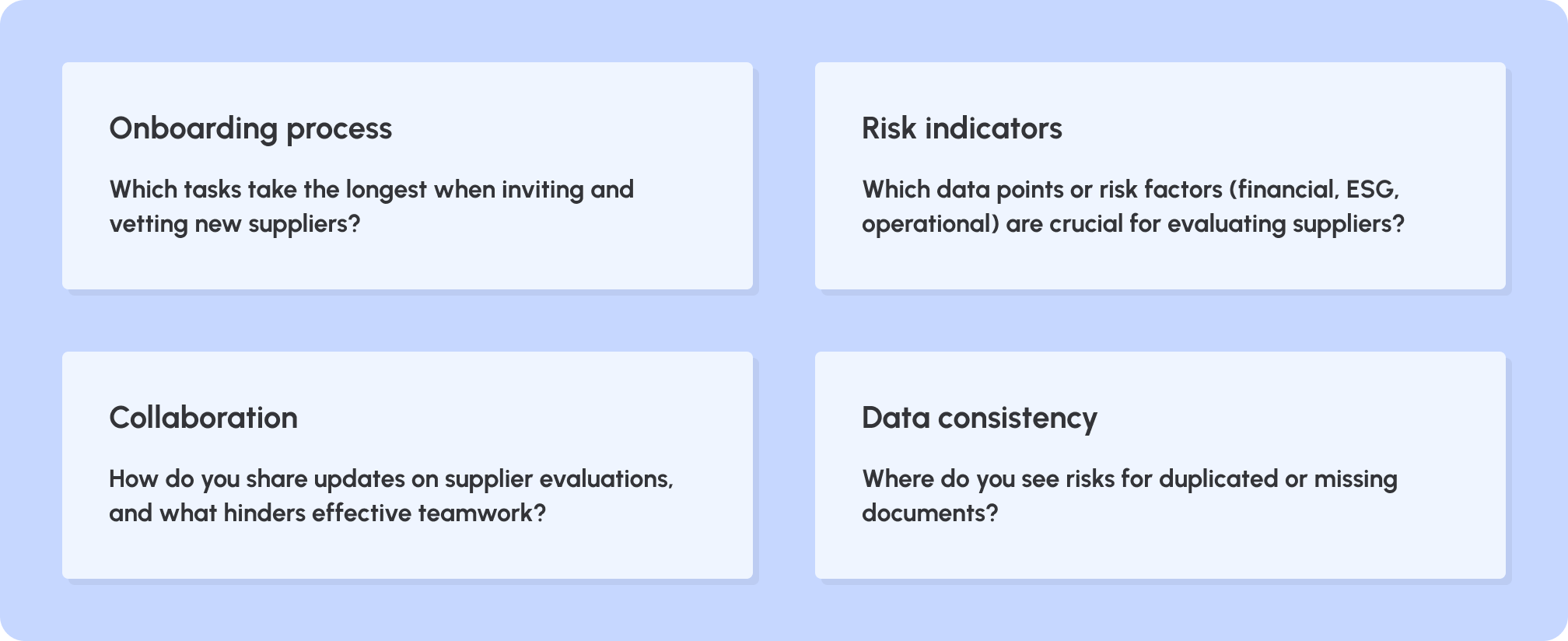
I ran interviews across Procurement, Finance, and Compliance to map how the work actually happened and where it broke. The pattern held everywhere: manual steps introduced errors, documents were collected outside the system, and risky suppliers surfaced too late to do anything about it.
The supplier side needed a different research lens entirely. External users had no familiarity with the system and no reason to push through complexity. That side had to be designed for a first-time user completing a regulatory requirement, not an internal analyst with daily access.
User Journey
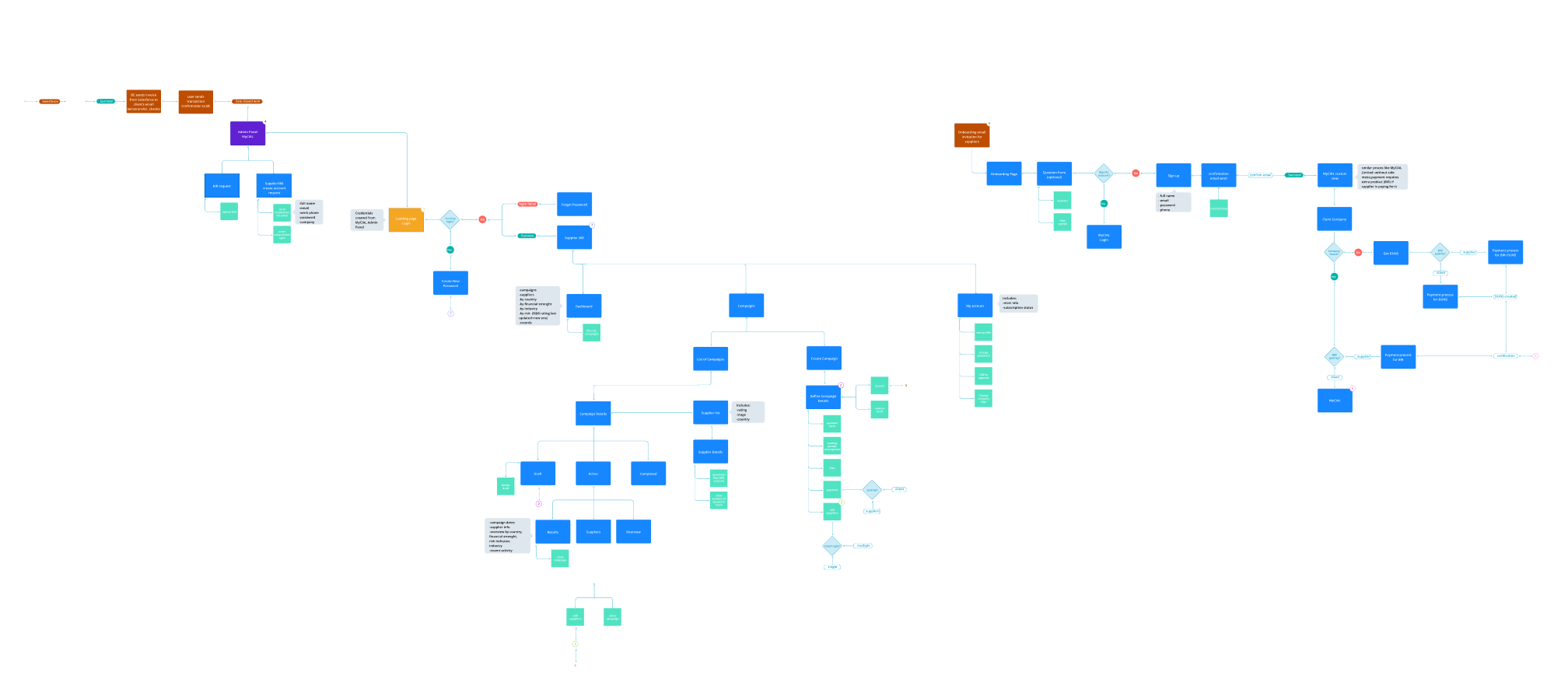
I mapped the full journey across both sides before designing a single screen.
Tracing the pathways for each internal role and the external supplier through every stage of onboarding and evaluation made the structural split visible before it became a design decision.
Buyer Side
Procurement, Finance, and Compliance each see the data their role needs and nothing that is not theirs.
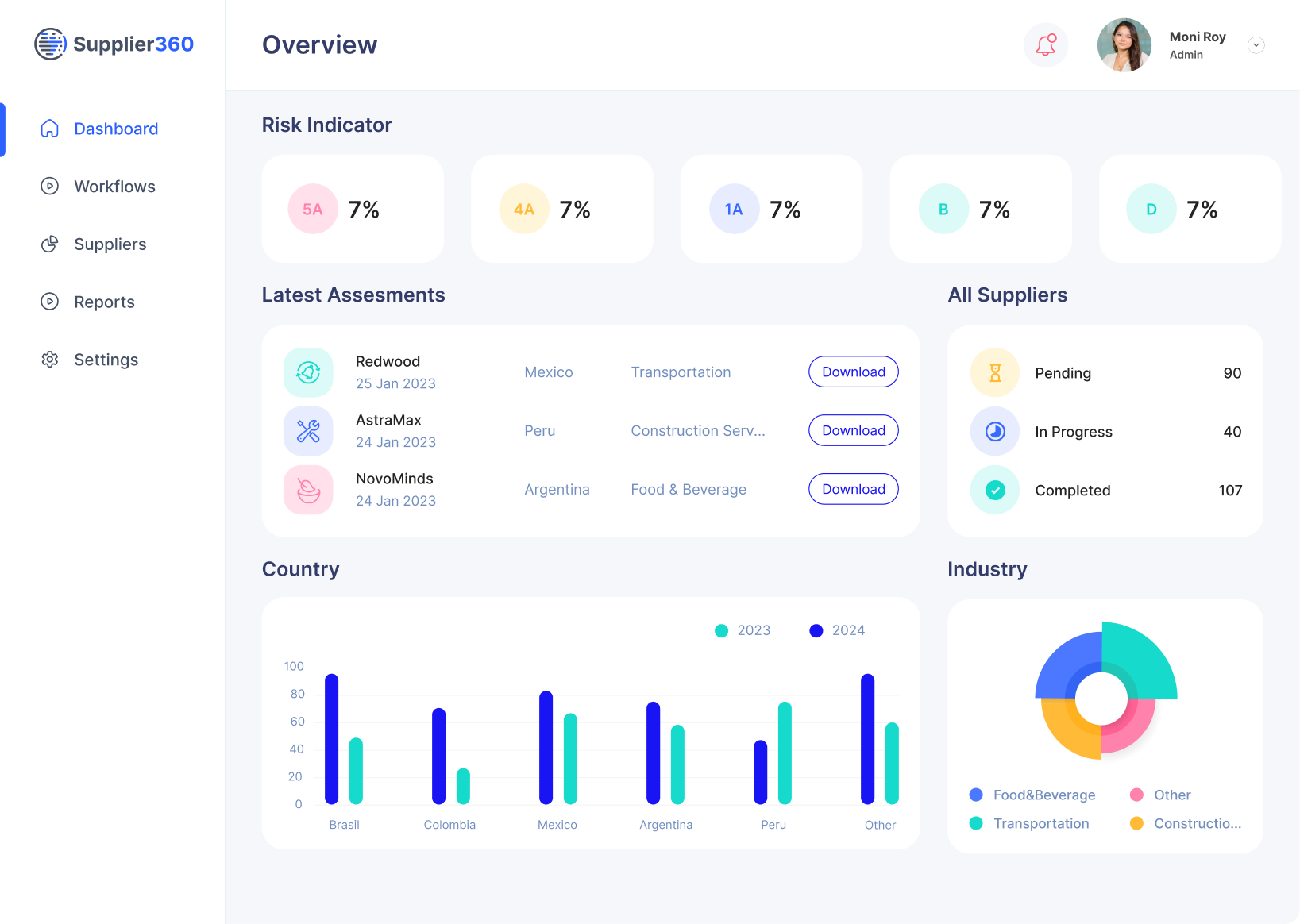
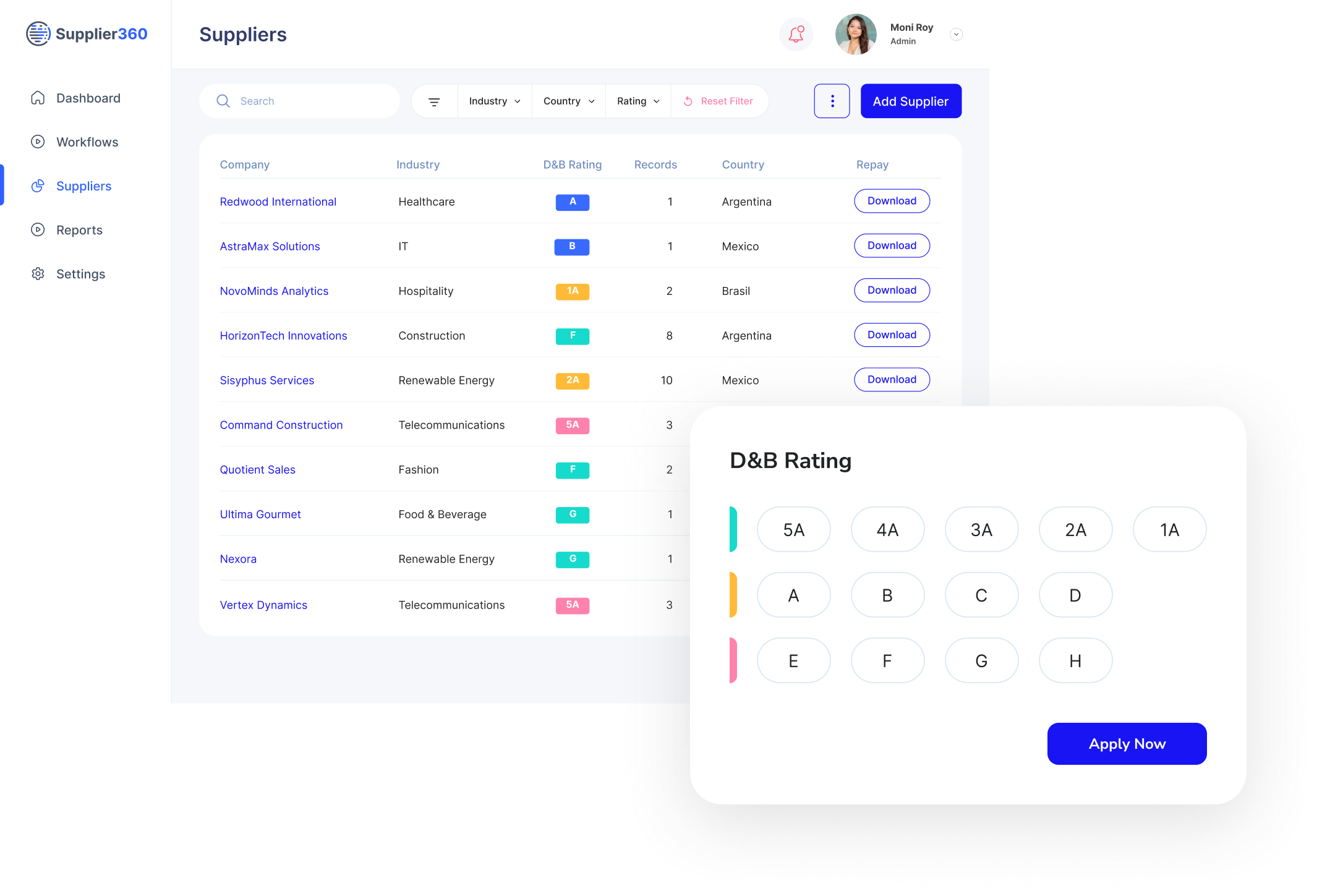
Procurement runs the full supplier portfolio through customisable onboarding workflows: document requests, status tracking, approval routing. The dashboard surfaces at-risk suppliers across the portfolio without anyone having to go digging. D&B financial ratings and risk indicators sit at every evaluation stage, so Finance and Compliance share one auditable view of supplier health.
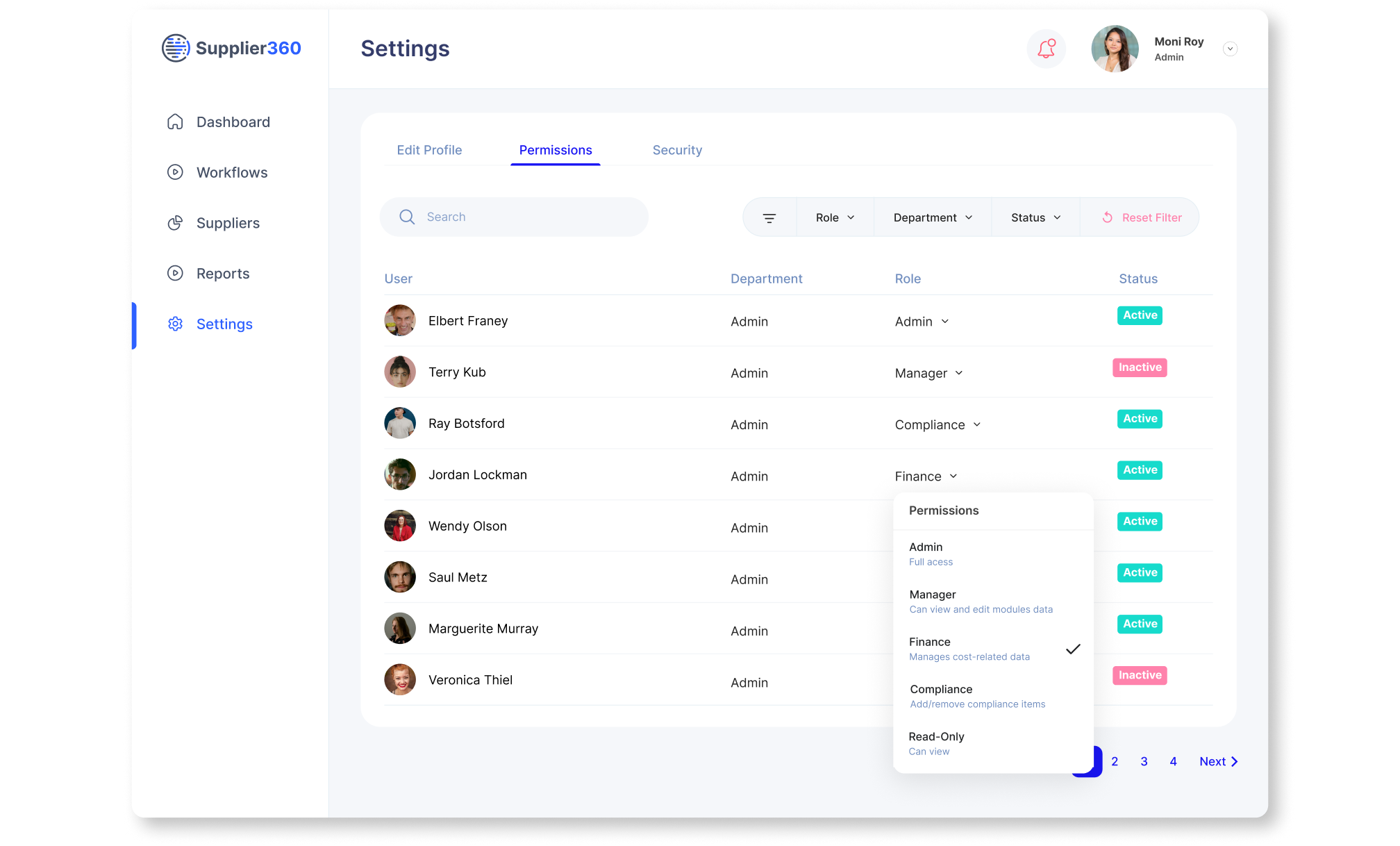
The screening tools pull D&B rating data, financial strength, risk indicator, Paydex score, straight into the supplier profile, and the rating filter surfaces the full Dun & Bradstreet scale so analysts can set thresholds without leaving the platform. Underneath it, the permissions model, Admin, Manager, Finance, Compliance, Read-Only, is what keeps three reading speeds from stepping on each other.
Supplier Side
Consumer-grade clarity sitting inside an enterprise compliance tool.
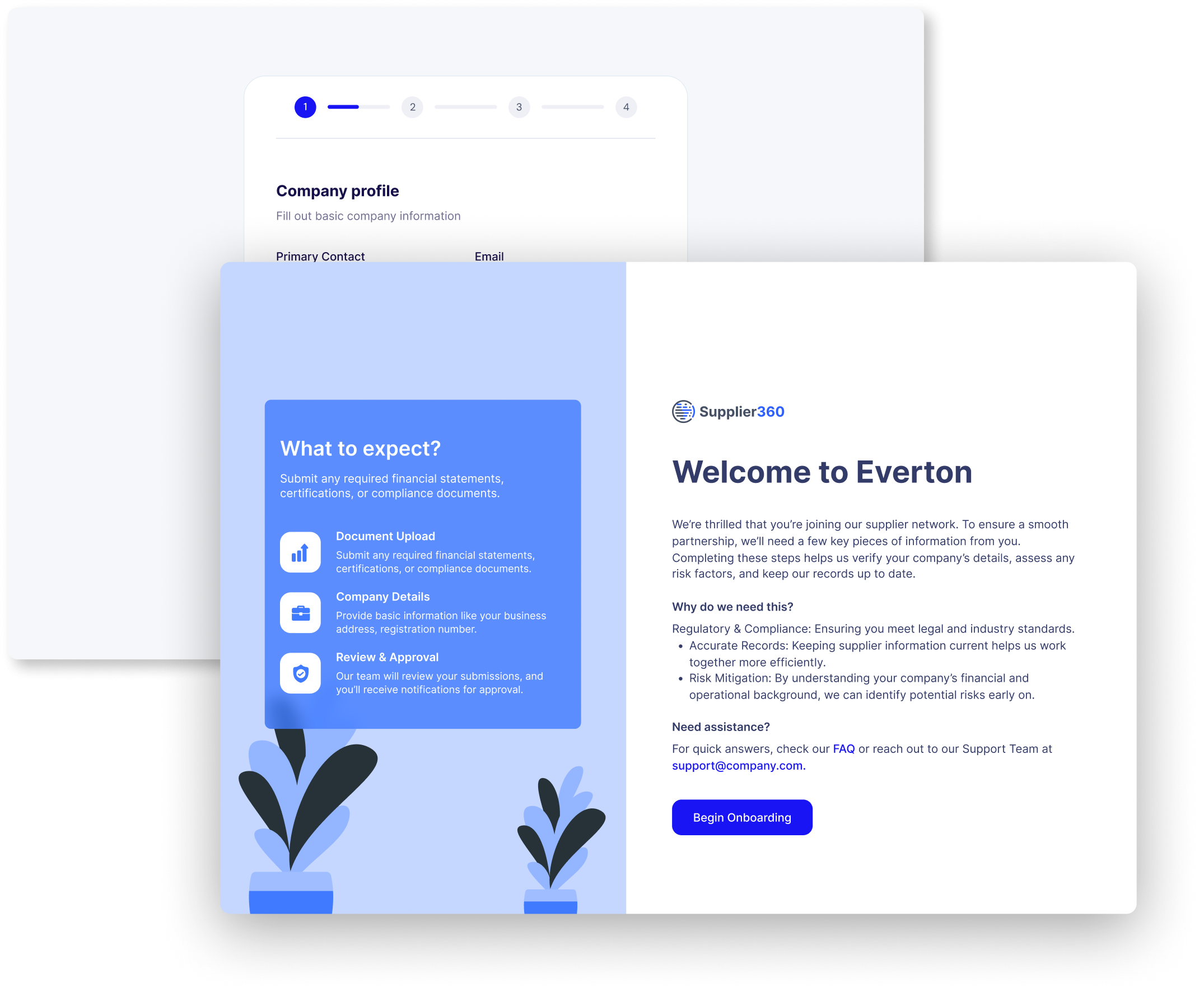
The supplier flow is a four-step wizard: Document Upload, Company Details, Review, Approval, surfacing one task at a time. Where something is required for regulatory reasons, the interface says so in plain language rather than leaving the supplier guessing. I designed it from scratch with its own cognitive model, not as a stripped-down copy of the buyer dashboard.
Testing
Feedback sharpened both sides of the platform in different ways.
I ran usability sessions with each internal role and with external users walking through the supplier flow. Filtering expanded to cut time-to-insight in the risk dashboard, workflow status got clearer across team members, and the onboarding wizard was refined to reduce drop-off at document upload.
Result
Companies moved their supplier portfolios off spreadsheets and into one auditable system.
Supplier360 shipped as a commercial product, now live across Latin America inside the CIAL Dun & Bradstreet suite. D&B risk data sits at every evaluation stage, and suppliers complete their own onboarding without the buyer's team stepping in to do it for them.
.svg)

.avif)
.avif)